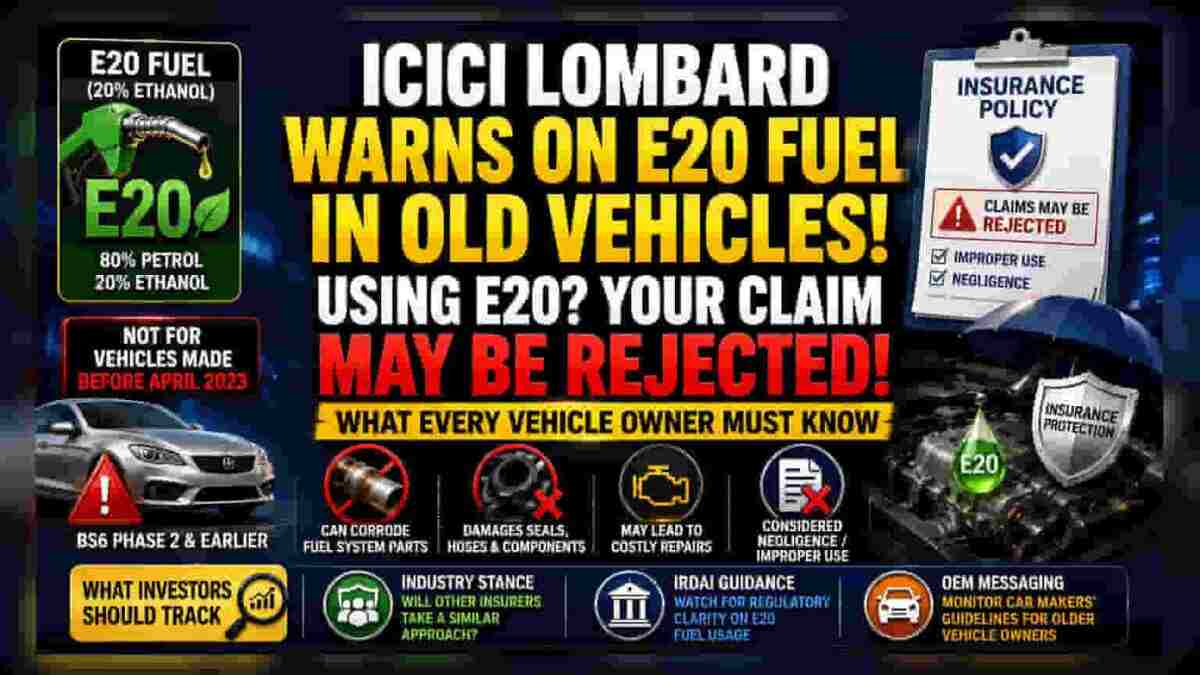
As India moves toward cleaner and more sustainable fuels, E20 petrol has become a major focus in the country’s transportation sector. E20 fuel contains 20% ethanol and 80% petrol, helping reduce dependence on imported crude oil and lowering carbon emissions. While this transition offers environmental and economic benefits, it also raises concerns for vehicle owners whose cars are not designed to run on E20 fuel.
One of the most important issues emerging from this shift is the possibility that insurance claims for engine or fuel-system damage may be rejected if the vehicle is not E20-compliant. Car owners must understand the implications of using E20 fuel in older or incompatible vehicles to avoid unexpected repair costs and insurance disputes.
What Is E20 Fuel?
E20 is a blend of 20% ethanol and 80% gasoline. Ethanol is a renewable fuel produced from agricultural sources such as sugarcane, corn, and other biomass. The Indian government has accelerated the rollout of E20 fuel to reduce fossil fuel consumption and promote cleaner energy alternatives.
Many modern vehicles launched in recent years are engineered to handle higher ethanol blends. However, several older cars and motorcycles may not be fully compatible with E20 fuel.
Why Non-Compliant Vehicles Face Risks
Vehicles not designed for E20 fuel can experience various mechanical issues over time. Ethanol has different chemical properties than pure petrol. It absorbs moisture more easily and can be more corrosive to certain rubber, plastic, and metal components used in older fuel systems.
Potential problems include:
- Fuel line deterioration
- Damage to fuel pumps
- Corrosion in fuel injectors
- Reduced engine performance
- Difficulty in cold starts
- Increased wear on engine components
If such damage occurs and is linked directly to the use of E20 fuel, insurers may investigate whether the vehicle was operated according to manufacturer recommendations.
How Insurance Companies Assess Claims
Motor insurance policies generally cover accidental damage, theft, natural disasters, and certain other risks. However, insurance companies often exclude damage resulting from improper use, negligence, or failure to follow manufacturer guidelines.
When a claim is filed for engine or fuel-system damage, insurers may examine:
- Vehicle age and model
- Manufacturer fuel compatibility recommendations
- Maintenance records
- Fuel usage history
- Technical inspection reports
If experts determine that E20 fuel caused the damage in a vehicle that was not approved for such fuel, the insurer may argue that the owner used the vehicle outside recommended operating conditions.
Why Claims Could Be Rejected
Insurance policies contain terms and conditions requiring vehicle owners to maintain and operate their vehicles properly. Using a fuel type that is not approved by the manufacturer may be considered a violation of these conditions.
In such cases, insurers could reject claims based on:
- Unauthorized fuel usage
- Mechanical breakdown exclusions
- Failure to follow manufacturer specifications
- Negligent vehicle operation
While every claim is assessed individually, vehicle owners should not assume that fuel-related damage will automatically be covered.
How to Check E20 Compatibility
Car owners should verify whether their vehicle is E20-compatible before regularly using the fuel. The easiest ways include:
Check the Owner’s Manual
Most manufacturers specify approved fuel types in the vehicle handbook.
Visit the Manufacturer’s Website
Automakers frequently publish lists of E20-compatible models and production years.
Contact an Authorized Dealer
Dealership service centers can confirm whether a specific vehicle can safely operate on E20 fuel.
Review Government and Industry Guidelines
Official announcements often provide updates regarding vehicle compatibility and fuel transition timelines.
Steps to Protect Your Insurance Coverage
To avoid disputes with insurers, vehicle owners should take several precautions:
Follow Manufacturer Recommendations
Always use the fuel grade and ethanol blend recommended for your vehicle.
Keep Service Records
Maintain proper documentation of servicing and repairs. These records can support your case if a claim arises.
Retain Fuel Receipts
Fuel purchase records may help establish usage patterns and compliance with recommendations.
Consult Your Insurer
If you are unsure about coverage implications, speak with your insurance provider and seek clarification regarding E20-related damage.
Upgrade When Necessary
Owners of very old vehicles may consider upgrading to newer E20-compatible models to reduce long-term risks.
The Road Ahead
India’s transition to E20 fuel represents an important step toward energy security and environmental sustainability. However, vehicle owners must adapt responsibly to avoid mechanical problems and insurance complications.
As fuel standards evolve, understanding vehicle compatibility becomes increasingly important. Using E20 fuel in a non-compliant car could potentially lead to costly repairs and, in some situations, rejected insurance claims. By following manufacturer guidelines, maintaining proper records, and staying informed, drivers can protect both their vehicles and their insurance coverage while supporting India’s clean-fuel future.
Conclusion
The expansion of E20 fuel across India offers numerous benefits, but it also places greater responsibility on vehicle owners. Before filling up with E20 petrol, drivers should verify that their vehicles are approved for the fuel. Failure to do so could result in engine damage and possible insurance claim rejections. Staying informed and following manufacturer recommendations remain the best ways to ensure safe, trouble-free driving in the era of ethanol-blended fuels.